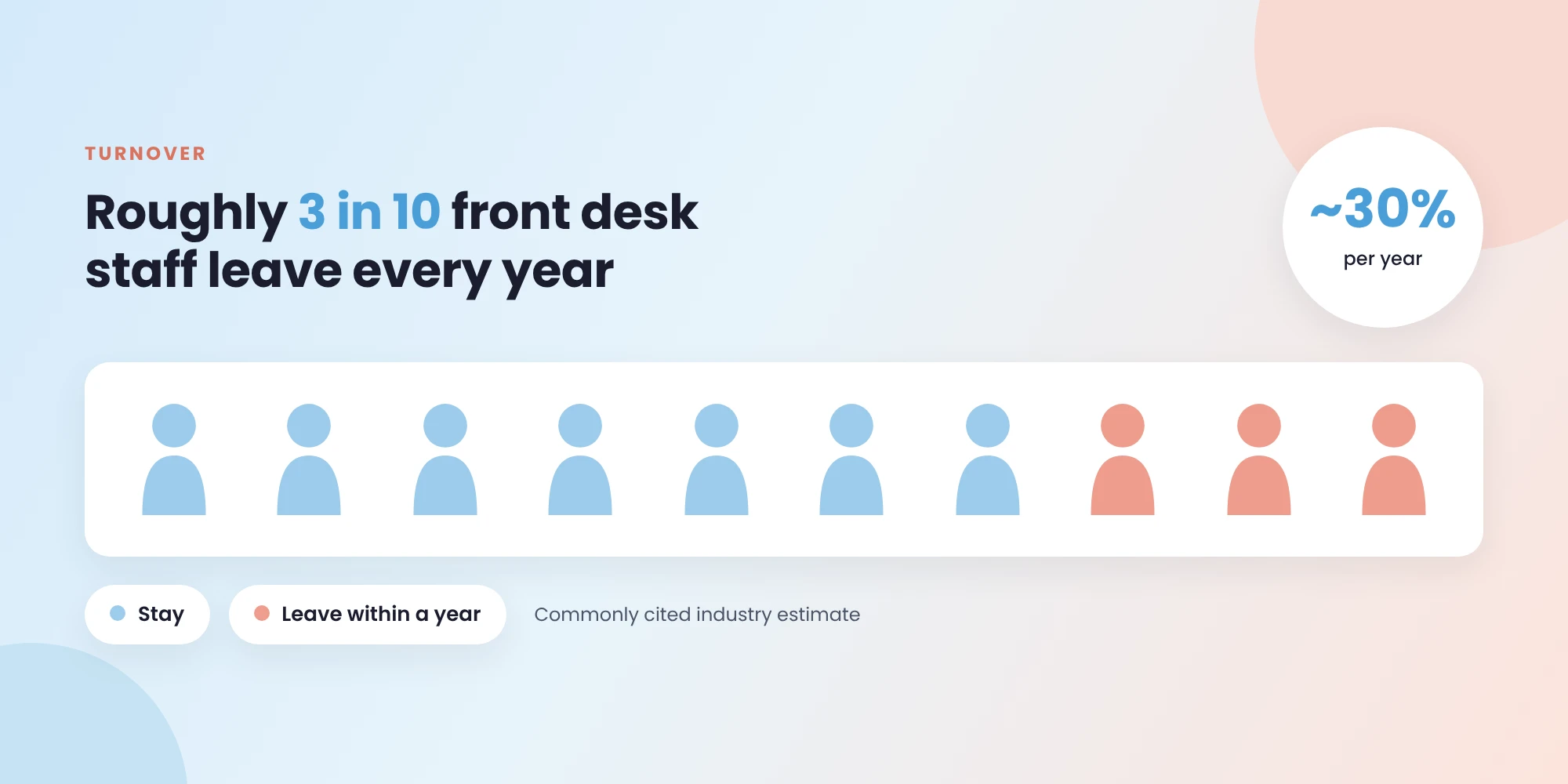
Dental practices lose front desk staff at a rate that would alarm almost any other industry, commonly cited around 30% annually. The usual explanations are pay, management style, or the job market. All of those matter. But talk to enough office managers and a quieter pattern shows up: the job people were hired for and the job they actually do are two different things.
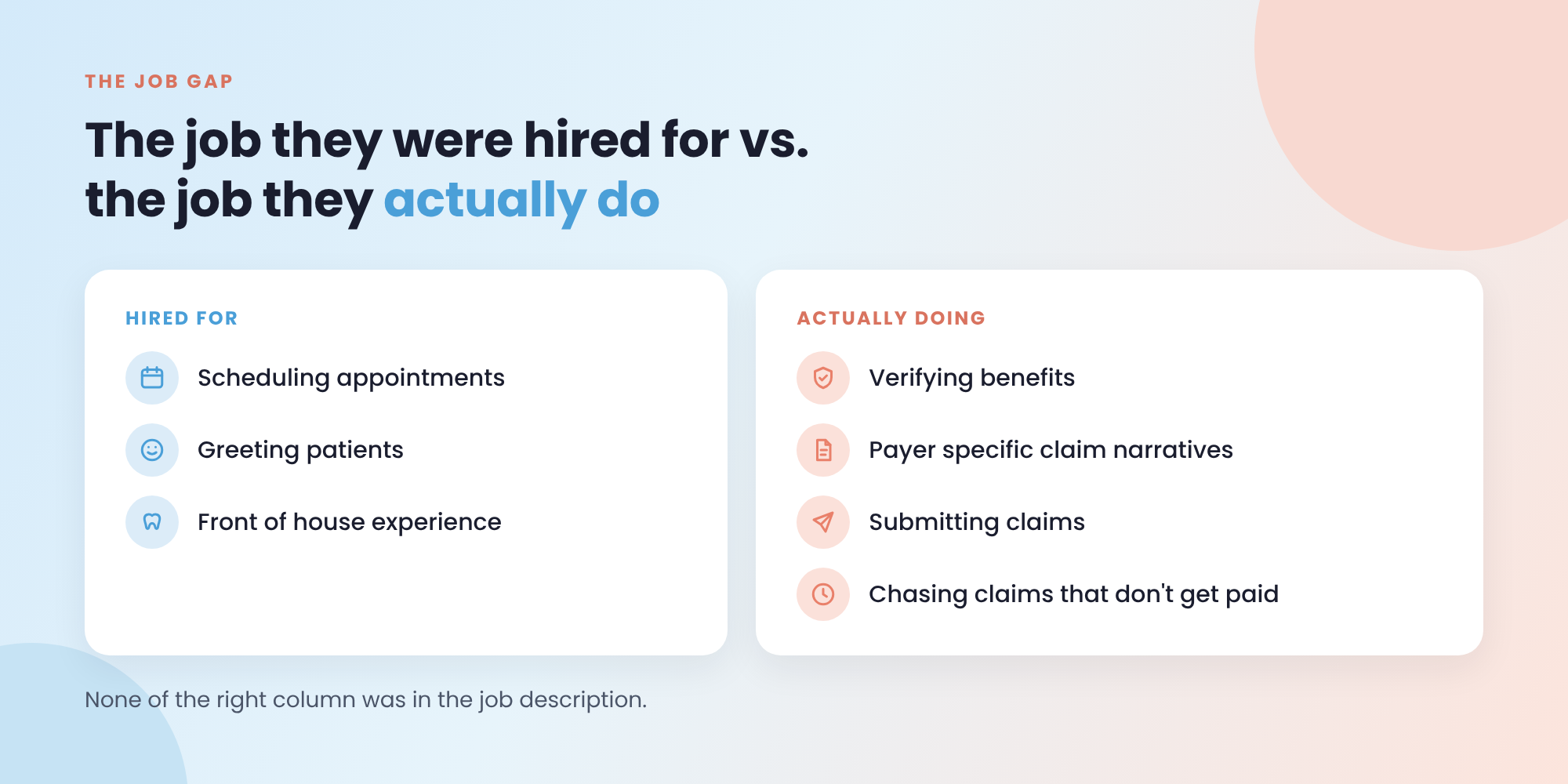
Most front desk hires are brought on to manage scheduling, greet patients, and handle the front of house experience. What actually fills their day is insurance work: verifying benefits, writing claim narratives tailored to what a specific payer wants to see, submitting claims, and then chasing the ones that don't get paid. None of that was in the job description, and very little of it is trained properly before someone is expected to be fast at it.
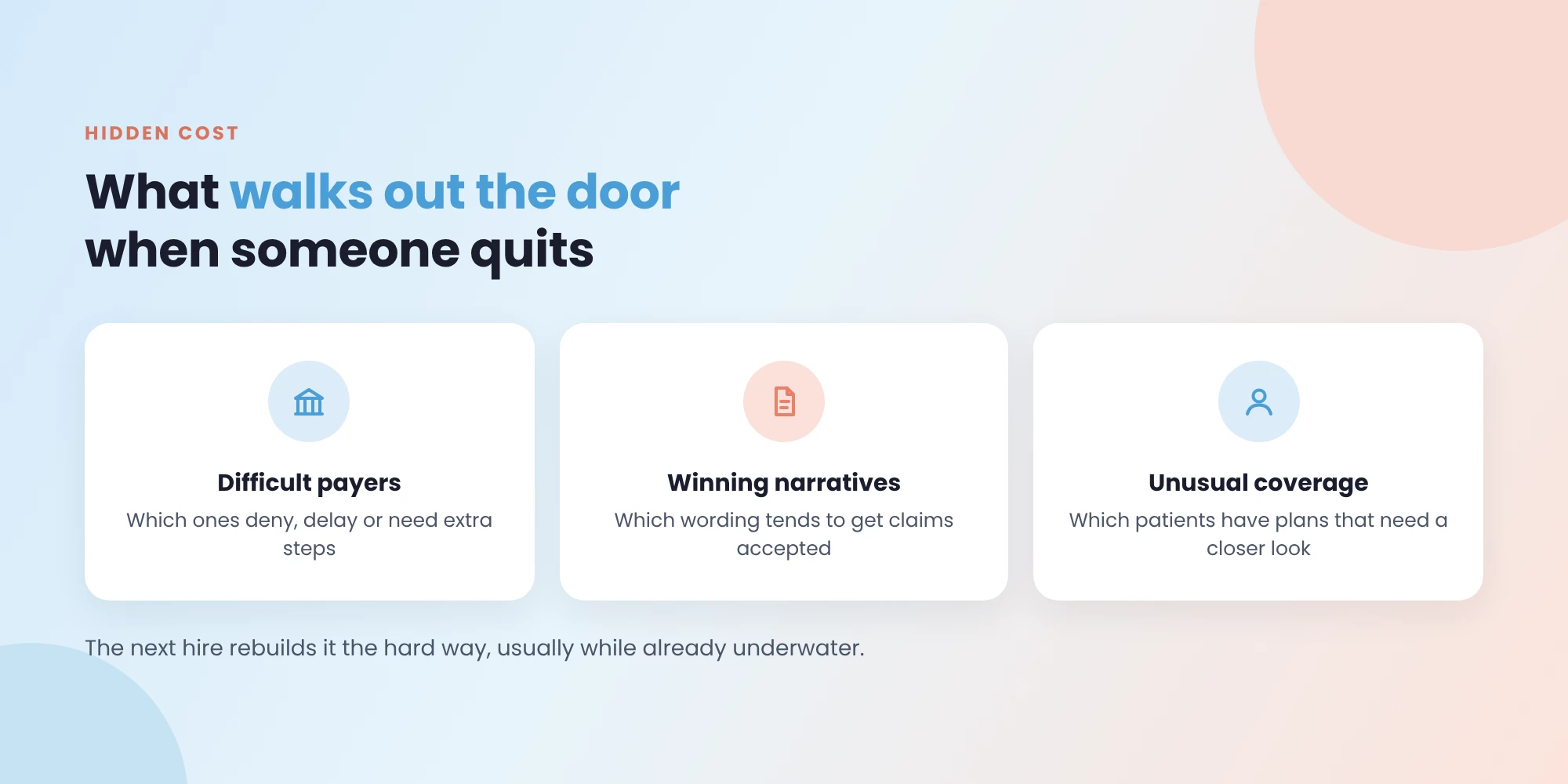
This matters because turnover isn't just a hiring cost. Every time a front desk role turns over, the practice loses institutional knowledge about which payers are difficult, which narratives tend to get accepted, and which patients have unusual coverage, and a new hire has to rebuild that knowledge the hard way, usually while already underwater.
The parts of the job that drive people out fastest tend to be the most repetitive and the least forgiving: eligibility checks that have to be done per patient, narratives that have to be reworded per payer, and follow up on claims that requires remembering to chase something days or weeks after the fact. These are also, not coincidentally, the exact tasks that automation handles well, because they're rule based and repetitive rather than requiring judgment.
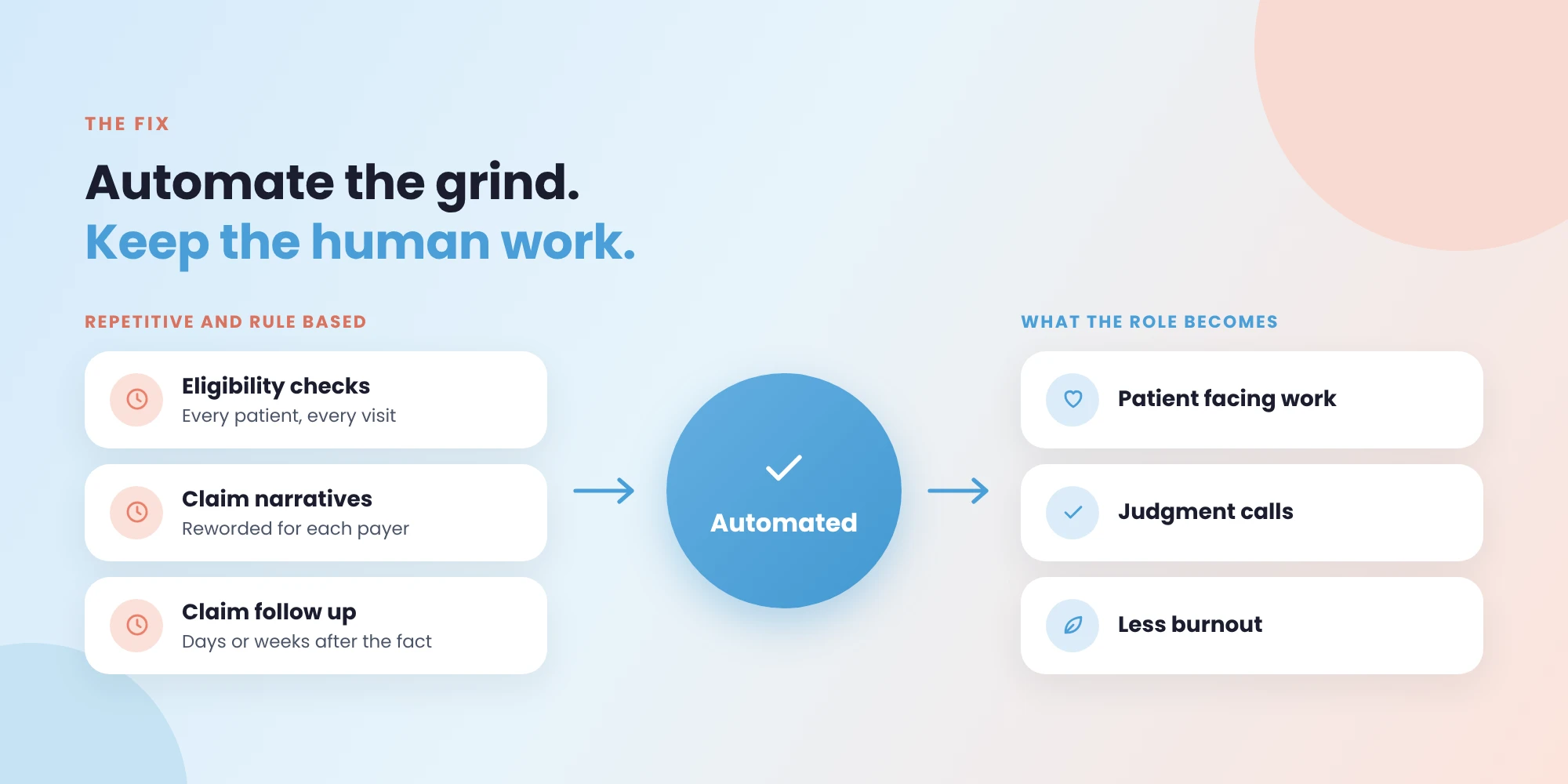
Dental Maverick AI was built around that specific insight: automate the repetitive insurance work so the role left behind is closer to what people actually signed up for, patient facing work and the judgment calls that need a person, rather than hours of lookup and paperwork. It won't fix a bad manager or a below market wage. It does remove a real, measurable source of the daily grind that burns people out in the first place.