Every office has a version of this story. The codes were right, the tooth numbers matched, the x rays were attached. The claim still came back denied.
It's frustrating because it feels random. It usually isn't. Most denials on "clean" claims trace back to something that happened, or didn't happen, long before anyone clicked submit.
What a clean claim actually means
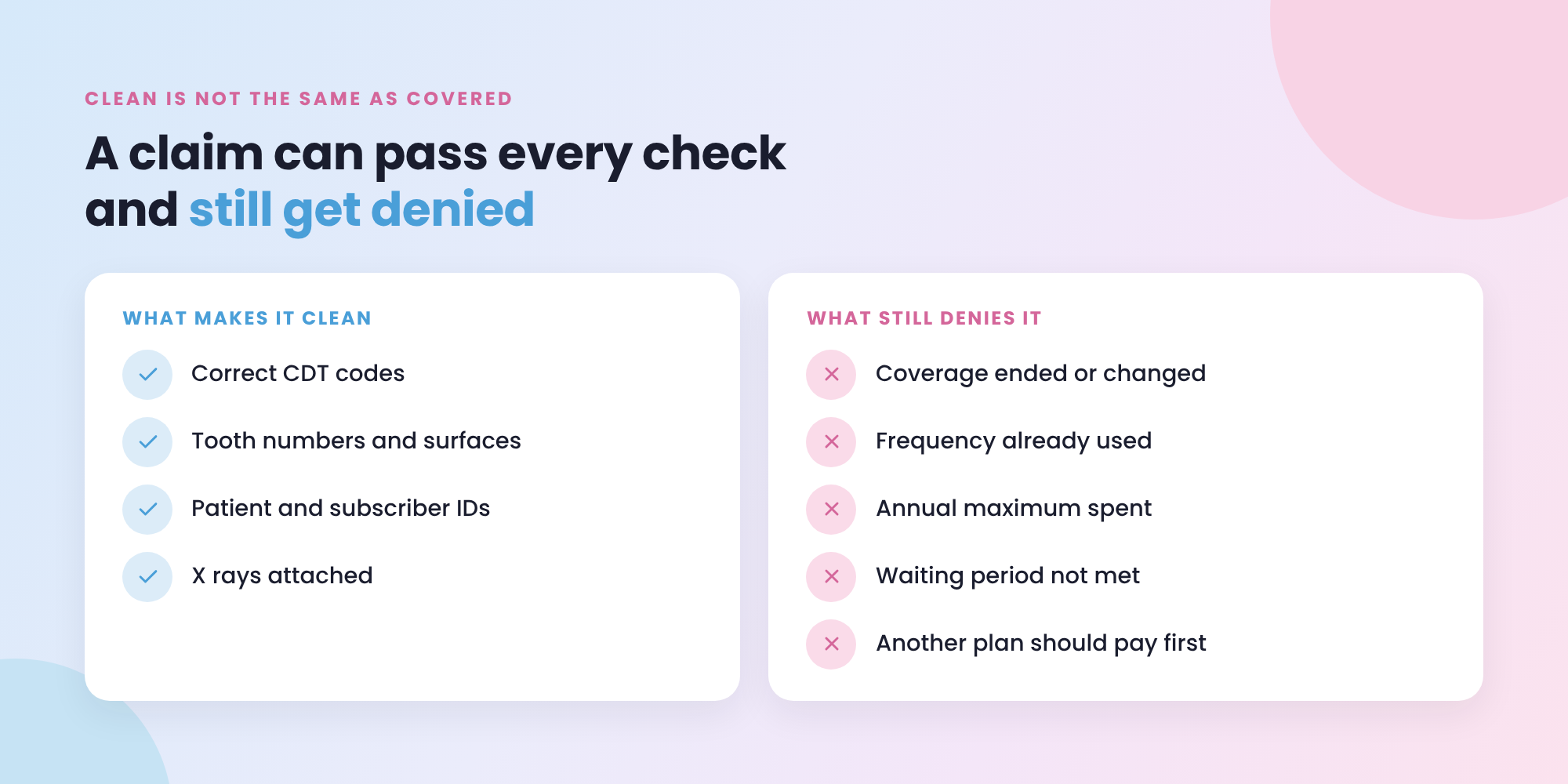
A clean claim is one that has every required data element filled in correctly, so the payer can process it without asking for anything else. Patient and subscriber IDs, other coverage, procedure codes, tooth numbers and surfaces, provider details. Complete, legible and accurate.
That definition is about format. It says nothing about whether the patient was eligible that day, whether the plan had already paid for this procedure this year, or whether the narrative matched what this specific payer wants to see. A claim can be perfectly clean and still be dead on arrival.
The denials that aren't about coding
When you look at the reason codes on denied claims, a few show up again and again:
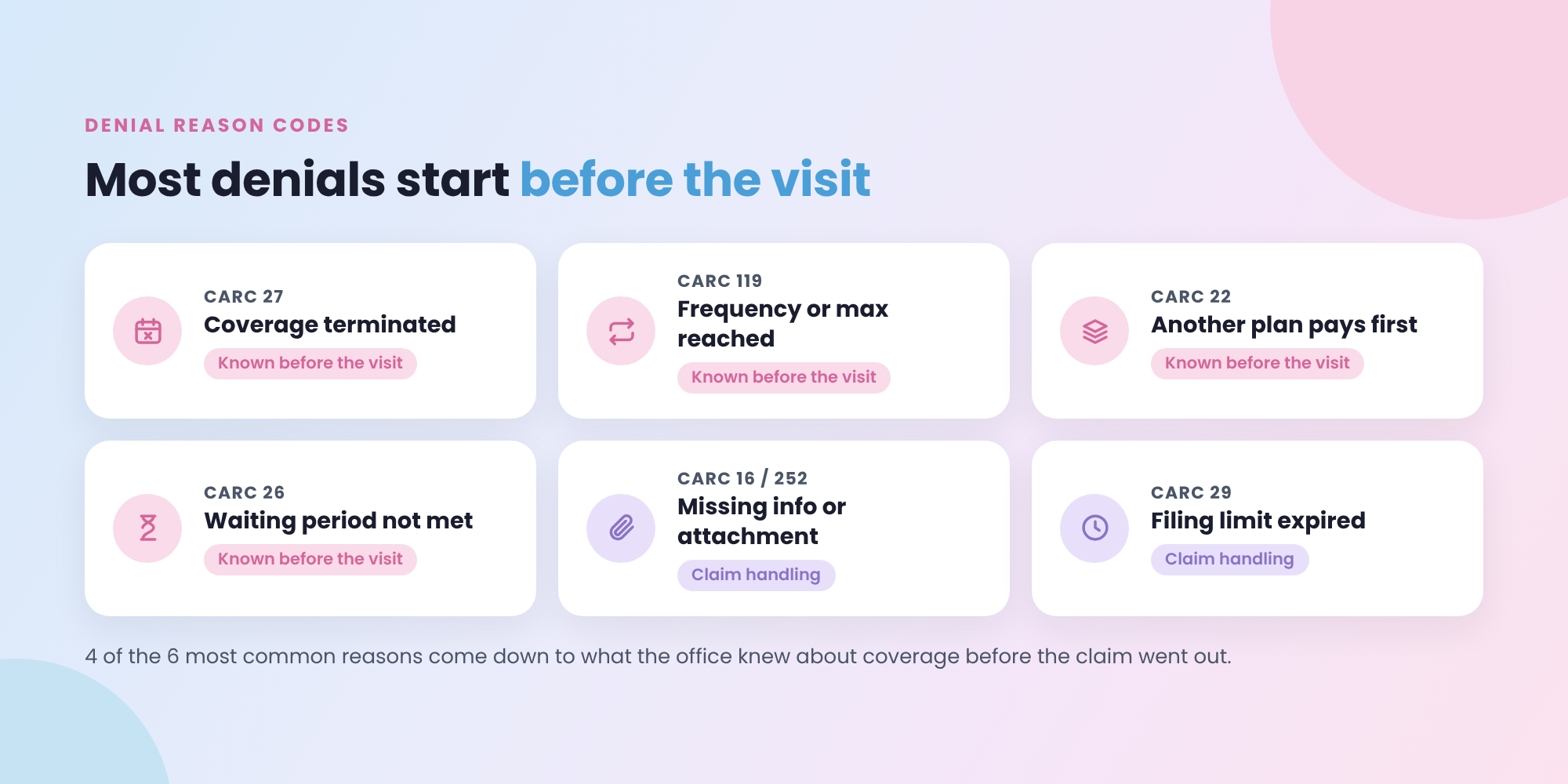
- CARC 27, expenses incurred after coverage terminated. The patient's plan ended, changed, or moved to a new employer and nobody caught it.
- CARC 119 or 151, frequency or benefit maximum reached. The patient already had two cleanings this year, or a crown on that tooth four years ago, or the annual max is spent.
- CARC 22, coordination of benefits. Another plan should have been billed first.
- CARC 26, expenses incurred before coverage. A waiting period hadn't been met yet.
- CARC 16 or 252, missing information or attachments. The payer wanted a narrative, a perio chart or a dated x ray it didn't get.
- CARC 29, timely filing expired. The claim sat too long, often because a previous denial was never reworked.
Notice the pattern. Only one or two of these are really about how the claim was filled out. The rest are about what the office knew, or didn't know, about the patient's coverage before the appointment.
Where denials actually start: the front of the visit
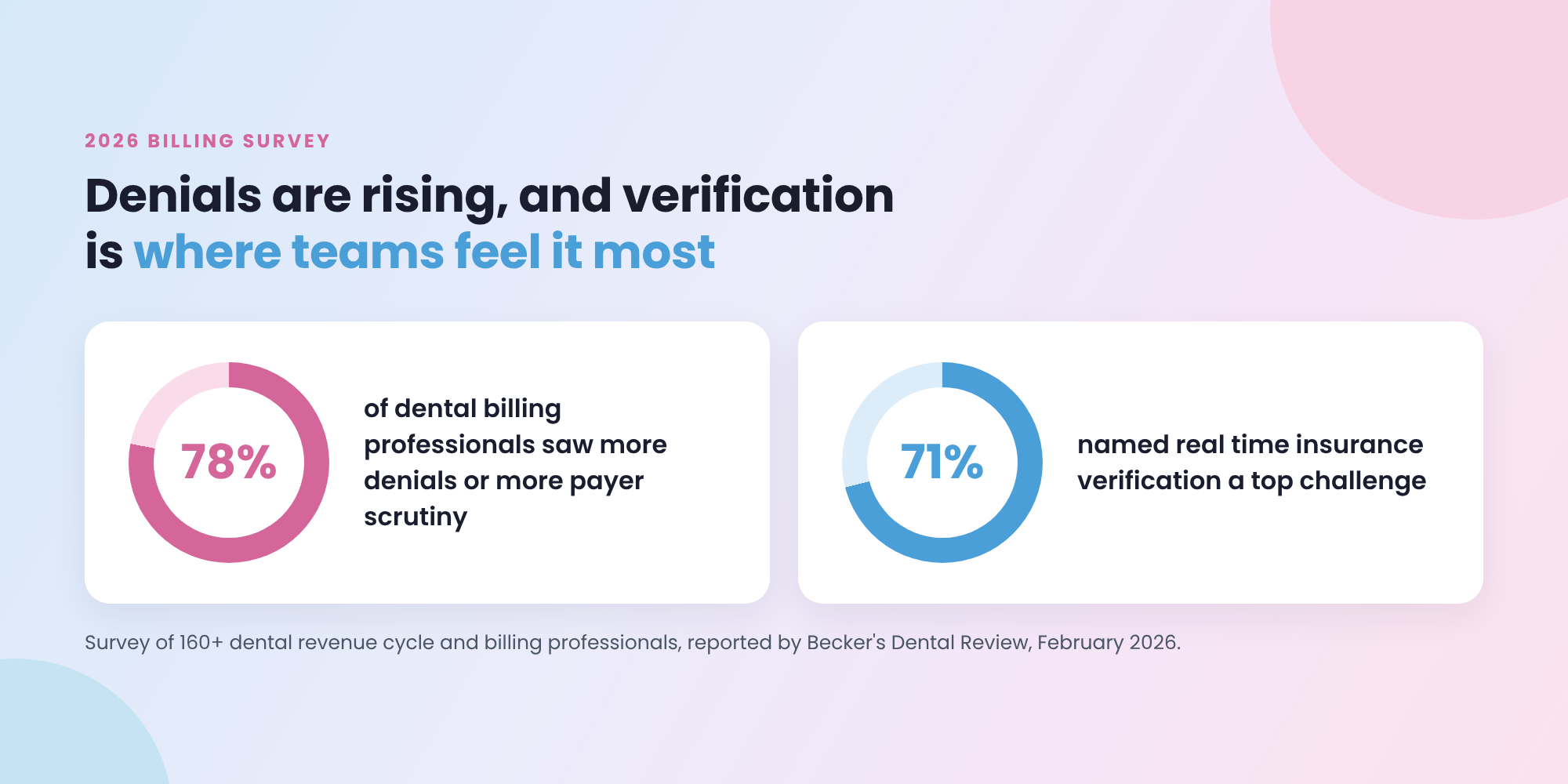
Industry surveys keep landing in the same place. In one 2026 survey of more than 160 dental billing professionals, 78 percent reported more denials or more payer scrutiny, with medical necessity and frequency limitations named as the main drivers, and 71 percent called real time insurance verification a top challenge.
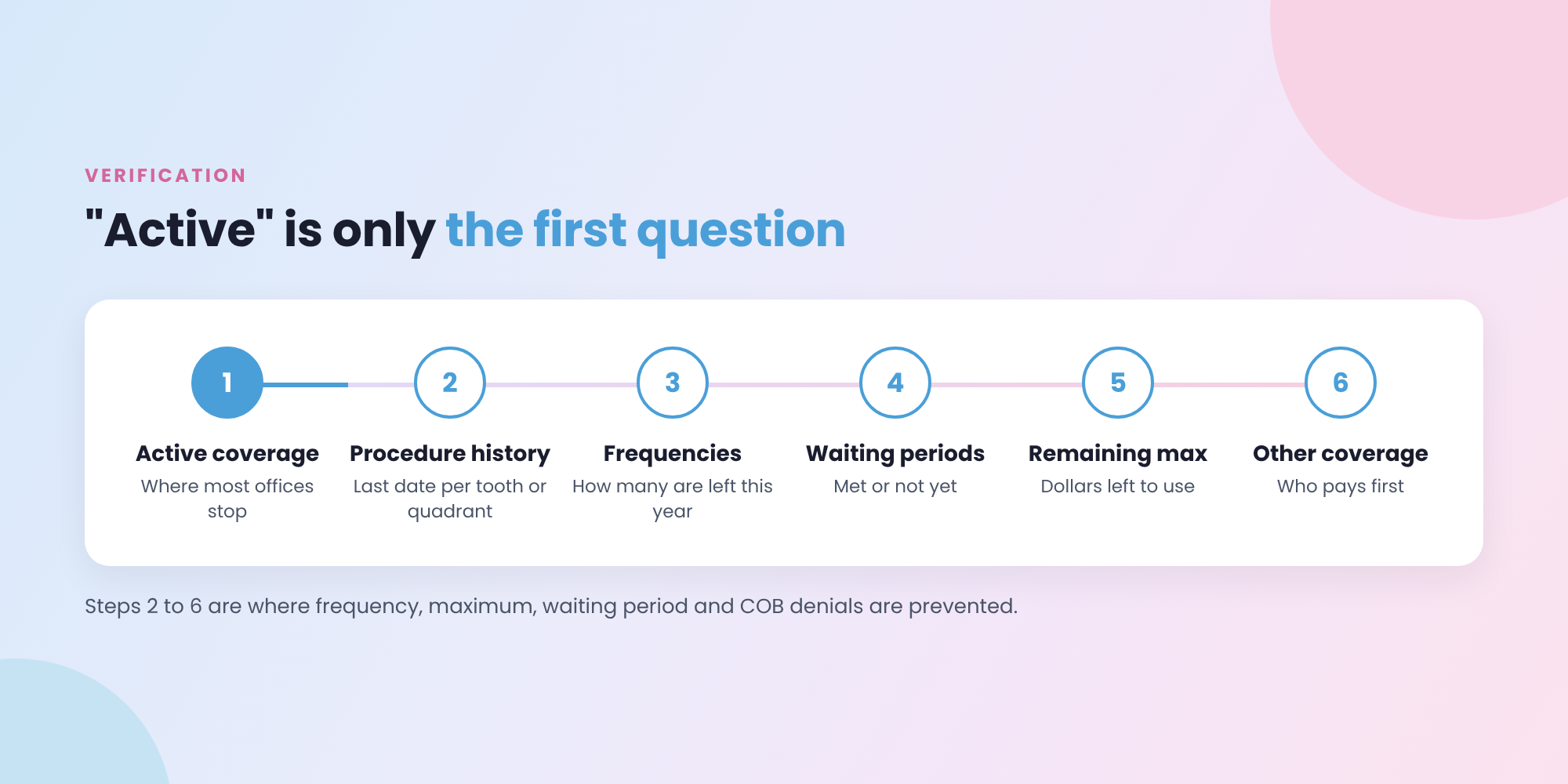
That makes sense once you see how verification usually works. A team member checks eligibility, maybe a day or two before the visit, and confirms the patient is active. But "active" is only the first question. The details that actually decide whether a claim gets paid are the ones that take the longest to find:
- When was this procedure last paid, on this tooth or this quadrant?
- Is there a waiting period on major services?
- How much of the annual maximum is left?
- Is there a downgrade or alternate benefit on this procedure?
- Is there secondary coverage?
When those answers are missing, the office is guessing. And the payer finds out the truth when the claim arrives.
Then there's the narrative problem
The second big source of denials on otherwise clean claims is documentation. Payers vary widely in what they expect. One wants a periapical x ray within 12 months showing the full crown and apex. Another wants photos with the first claim. Another flags narratives that look templated across patients.
A narrative that works for one payer can get the same procedure denied by another. That's not a coding mistake. It's a knowledge problem, and it usually lives in the head of whoever has been doing claims the longest.
Why denials are so expensive
A denial isn't just a delay. Every reworked claim takes staff time to research, correct and resubmit, and some claims go through several rounds before they're paid. Others never get resubmitted at all. They age out, get written off, and quietly become part of your collection gap.
Benchmarks suggest a healthy denial rate is around 4 percent or less. Many practices run well above that, and every point over is real money and real hours.
How to stop denials before they start
- Verify more than eligibility. Confirm history, frequencies, waiting periods, remaining max and COB before the visit, not just active status.
- Re-verify on a schedule. Plans change at renewal and when patients change jobs. Last year's breakdown is not this year's coverage.
- Track denials by reason code. If most of your denials are CARC 119 and 27, your problem is upstream, not in billing.
- Match narratives to payers. Keep notes on what each major payer expects for crowns, buildups and SRP, and write from the clinical notes, not a template.
- Work denials fast. The longer a denied claim sits, the closer it gets to timely filing limits.
The bottom line
Most "clean claim" denials aren't billing failures. They're information failures that happen before the patient sits down. Fix what the front desk knows at check in, and a lot of denials never happen.
Dental Maverick automates the insurance work that feeds those decisions, from verification to claims, so your team has the full picture before the claim ever goes out. Join the waitlist at dentalmaverick.ai.