"Active" is not the same as "verified." A patient can have active coverage and still leave you with a denied claim because of a frequency limit, a waiting period or a maximum that was already spent.
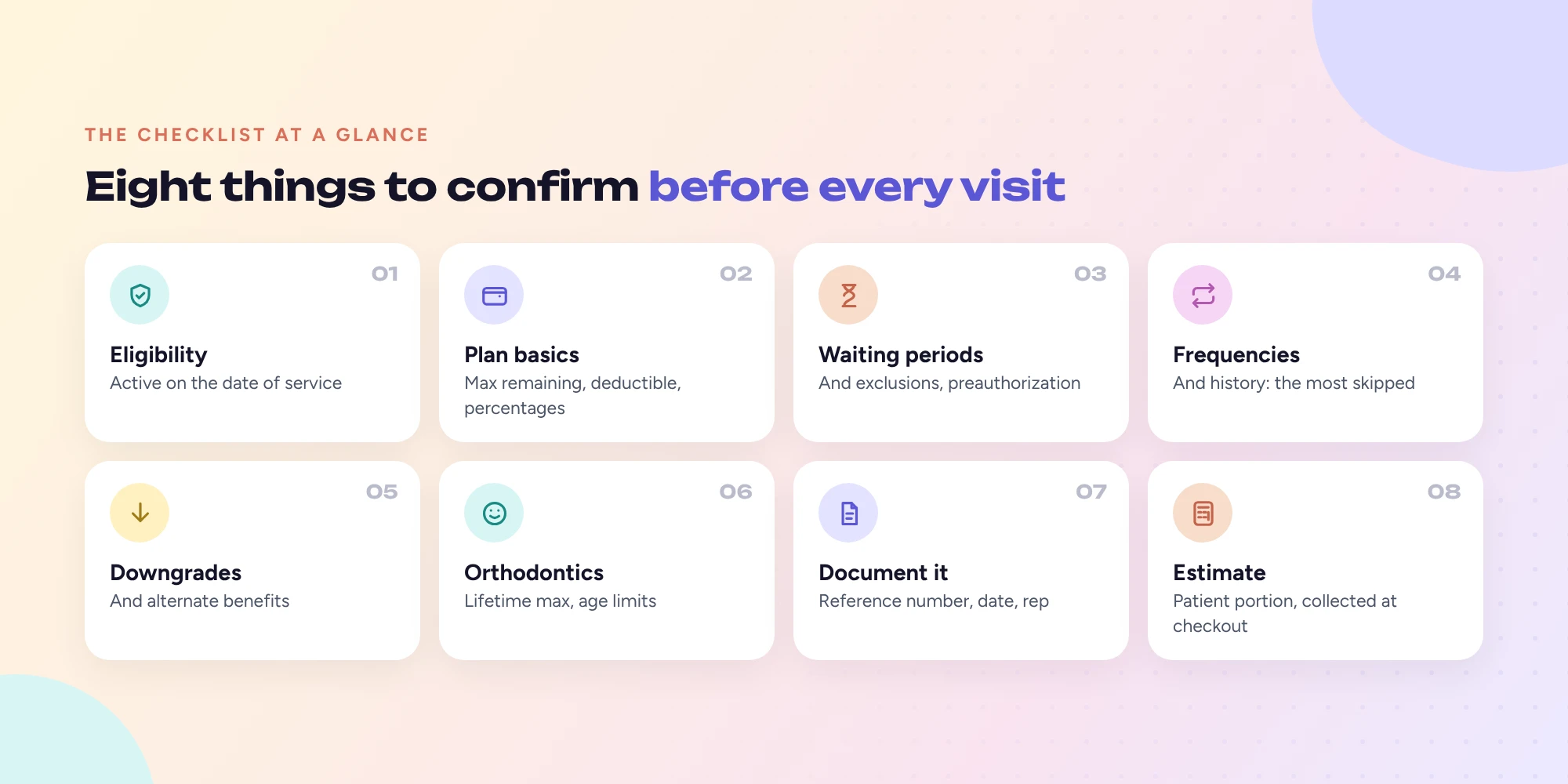
This checklist covers what to confirm before every visit, grouped in the order most teams work through it.
Before you start: have the right information
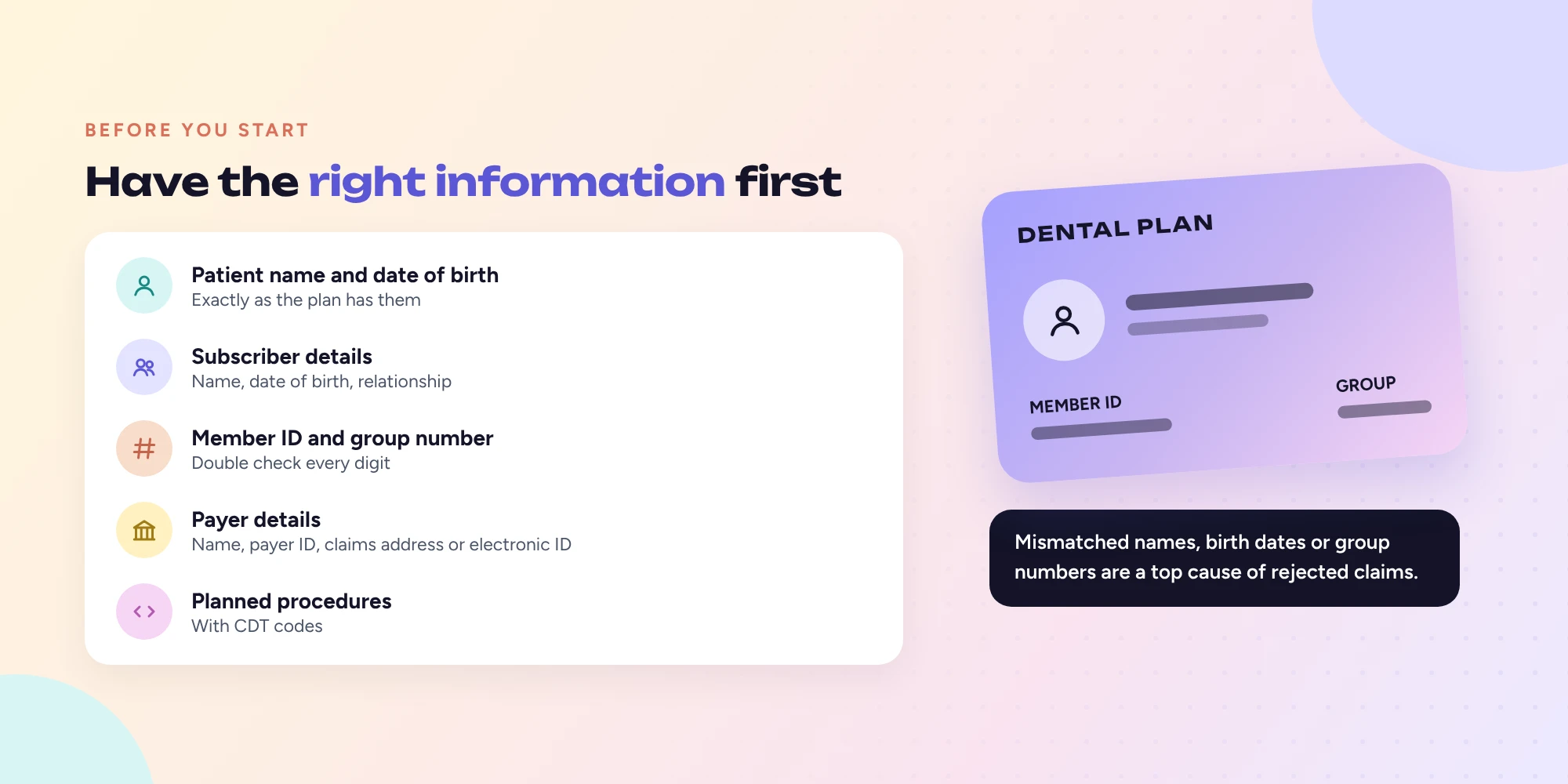
- Patient's full legal name and date of birth, exactly as the plan has them
- Subscriber's name, date of birth and relationship to the patient
- Member ID and group number
- Payer name, payer ID and the claims mailing address or electronic ID
- The procedures planned for the visit, with CDT codes
Mismatched names, dates of birth or group numbers are one of the most common causes of rejected claims. Fix them now, not after the denial.
1. Eligibility
- Is coverage active on the date of service, not just today?
- Effective date of the plan
- Termination date, if any
- Is this the patient's primary or secondary plan?
- Is there other coverage that should be billed first (coordination of benefits)?
- In network or out of network for your practice?
2. Plan basics
- Benefit year: calendar year or plan year? When does it renew?
- Annual maximum, and how much is remaining
- Deductible (individual and family), and how much has been met
- Does the deductible apply to preventive services?
- Coverage percentages by category: preventive, basic, major
- Fee schedule the plan pays from, if in network
3. Waiting periods and exclusions
- Waiting periods for basic or major services, and whether they've been met
- Missing tooth clause
- Exclusions that apply to planned treatment (for example, implants or cosmetic procedures)
- Preauthorization requirements for major treatment
4. Frequencies and history
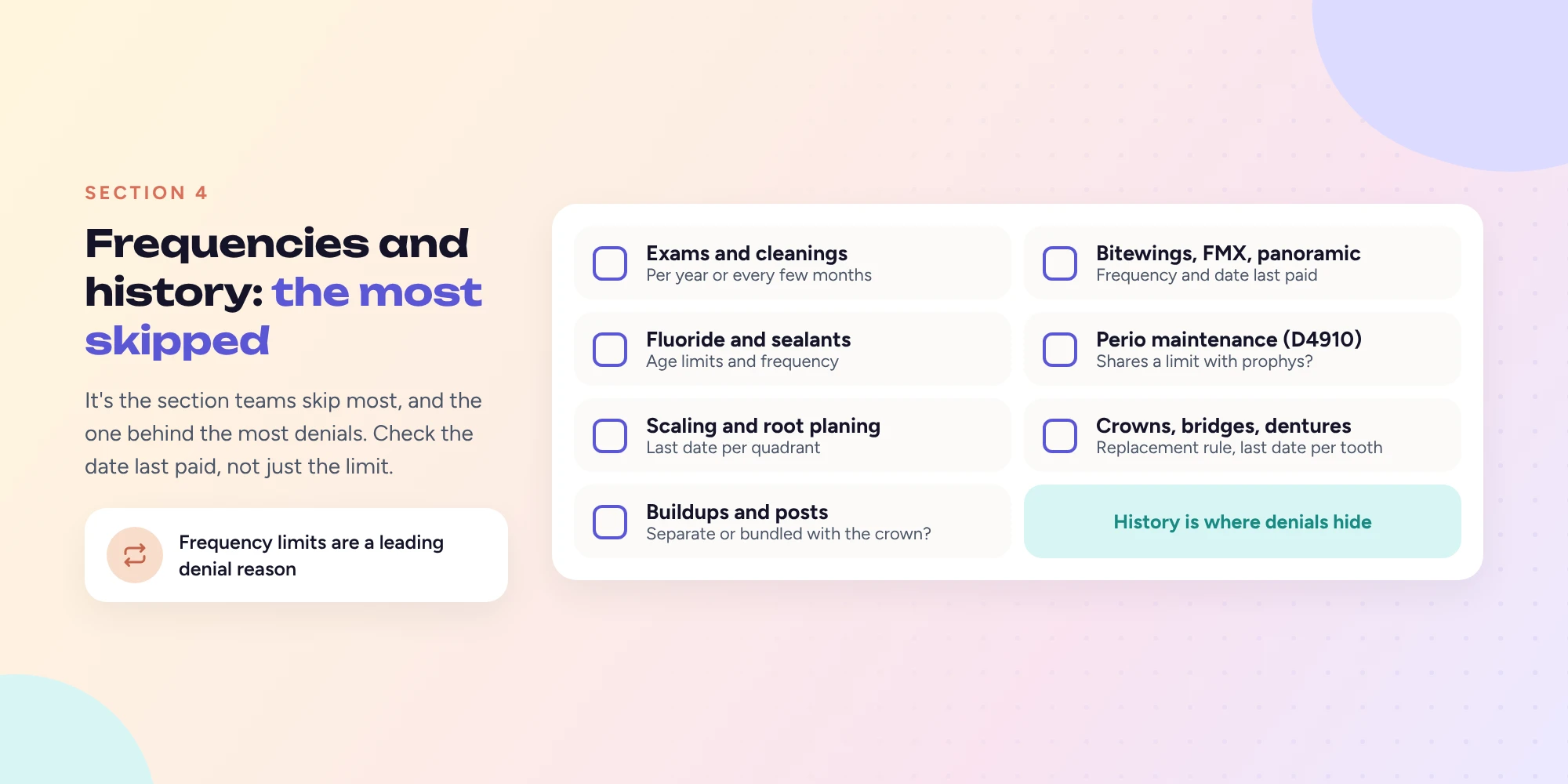
This is the section most often skipped, and the one that causes the most denials.
- Exams and cleanings: how many per benefit year, or every how many months?
- Bitewings and full mouth x rays or panoramic: frequency and date last paid
- Fluoride and sealants: age limits and frequency
- Periodontal maintenance (D4910): frequency, and whether it shares a limit with prophys
- Scaling and root planing: frequency per quadrant, and last date per quadrant
- Crowns, bridges and dentures: replacement rule (often 5 years or more), and last date on the specific tooth
- Buildups and posts: covered separately or bundled with the crown?
5. Downgrades and alternate benefits
- Are posterior composites downgraded to amalgam?
- Are crowns downgraded (for example, porcelain to metal on molars)?
- Is D4910 paid as an alternate benefit to D1110 after the limit?
Downgrades don't cause denials, but they cause surprise patient balances, which hurt collections almost as much.
6. Orthodontics, if relevant
- Lifetime orthodontic maximum, and how much has been used
- Age limits
- Payment schedule: lump sum or monthly
7. Document it
- Save the breakdown, the reference number if you called, and the name of the representative
- Record the date you verified, so you know when to recheck
- Note anything unusual on the patient's account so the next person doesn't have to dig
8. Turn it into an estimate
- Calculate the patient's expected portion for the planned treatment
- Share it with the patient before or at the visit
- Collect the patient's portion at checkout
How often to re-verify
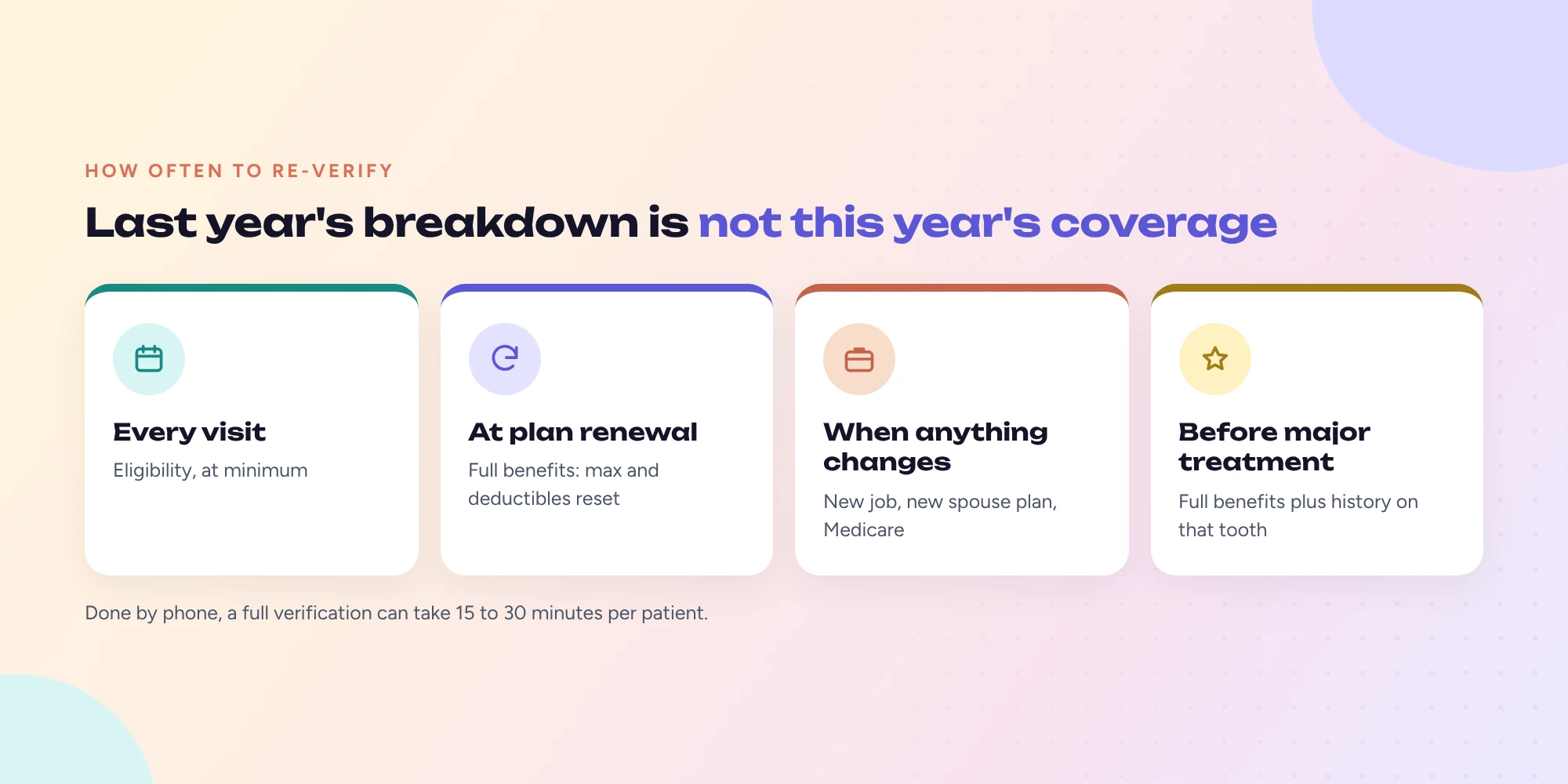
- Every visit: eligibility, at minimum
- At plan renewal: full benefits, since maximums, deductibles and sometimes coverage reset
- Whenever a patient says anything changed: new job, new spouse plan, Medicare, divorce
- Before major treatment: full benefits plus history on the specific tooth
The bottom line
A full verification takes time. Done by phone, it can run 15 to 30 minutes per patient. That's why so many offices stop at "active" and hope for the best. But every item on this list you skip is a denial or a surprise bill waiting to happen.
Dental Maverick automates insurance verification, including the history and frequency details most teams don't have time to chase. Get started at dentalmaverick.ai.